
Soft Skills Have a 256% ROI. Still Not Interested? The Surprising History That Might Change Your Mind
I say soft skills, you say…nothing because you are cringing (ew… “touchy-feely soft stuff, ya softie!”) or thinking, “Yeah, those are nice to have, but the world is on fire, I need my people to WORK. We don’t have time for that soft stuff.”
To which I would say, politely, of course, you have no idea what soft skills actually are. And you aren’t alone.
Which means you have no idea that research has been able to quantitatively show—and yes, qualitatively show—that “soft skills” improve your bottom line.
With that, I have your attention…yes?
So quickly, let’s set the record straight on what “soft skills” are and why that stupid term is even used in the first place.
Then we can kick around the numbers and close it out with what to do next—hint, the answer is schedule a call with me, but I will give you a few more tips to get started.
Oh, and the use of em dashes is my own, not AI. I love them, and I refuse to stop using them because AI has abused them.
Thanks a lot, US Army: Where the term “soft skills” comes from and what the hell they really are
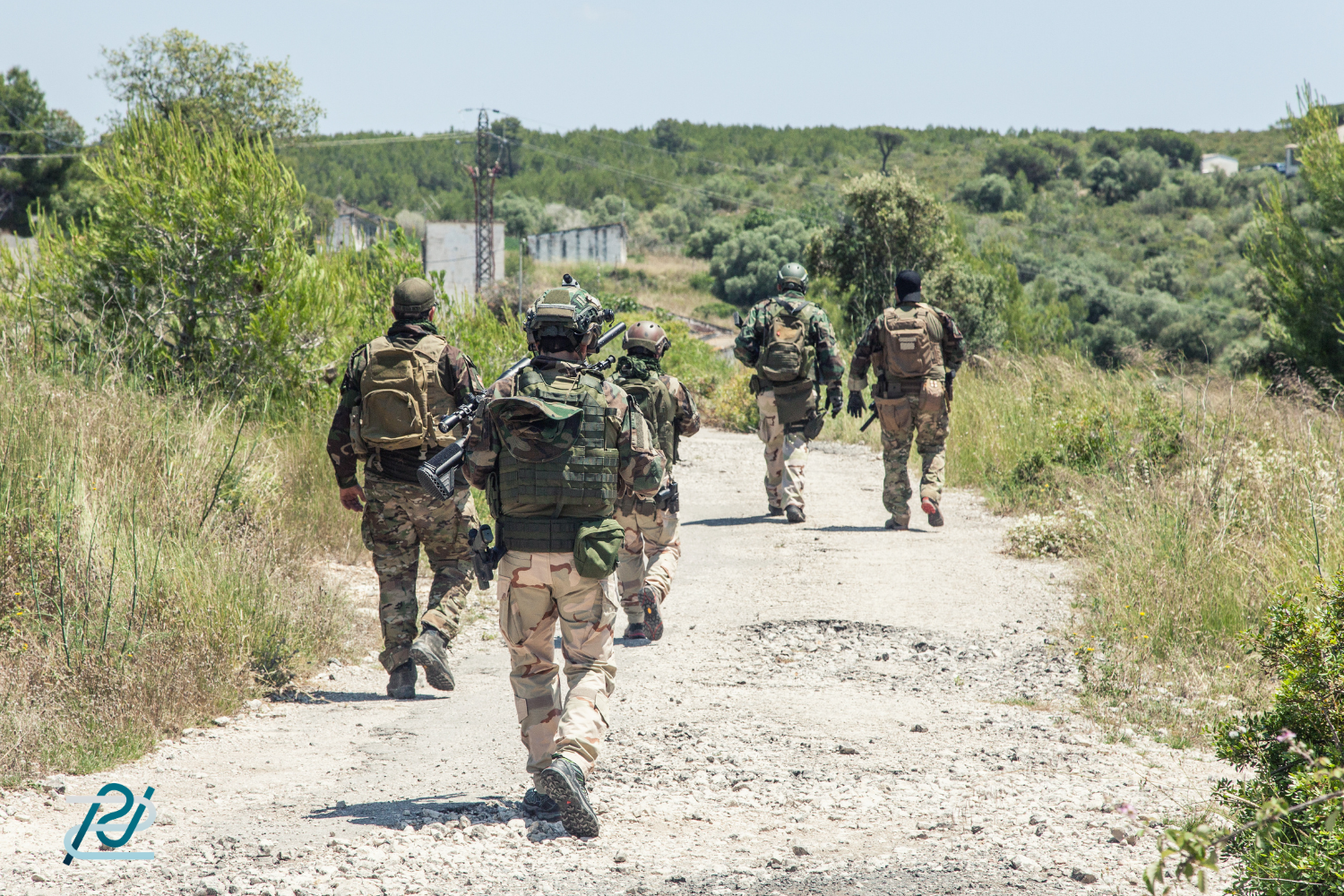
The term “soft skills” originated in the US Army. You can nerd out on that full history with Wikipedia. In short, the Army in the late 1960s and early 1970s realized that skills beyond the “technical” were imperative to effective performance. And you know, that matters in the Army. Effective performance can mean the difference between life and death.
The official term “soft skills” was used in a CONARC Training Workshop, October 5-7, 1971. PG Whitmore cited the CON Reg 350-100-1 definition:
"job-related skills involving actions affecting primarily people and paper, e.g., inspecting troops, supervising office personnel, conducting studies, preparing maintenance reports, preparing efficiency reports, designing bridge structures."
Yes, designing a bridge was considered a soft skill. As were supervising office personnel and inspecting troops. Essentially, “soft skills” were termed soft because they meant the skills that were not tied to operating machines. They are soft vs driving a tank (hard).
Less cringe-worthy now, huh?
Soft skills (which some are now trying to get everyone to call “power skills” or “common skills”, “essential skills”, or “core skills”) are not only about emotional intelligence, which you need on the battlefields of war and boardrooms, but also about earning trust, motivating yourself and your team, critical thinking, problem-solving, collaboration, public speaking, professional writing, teamwork, casting a strategic vision, being open-minded, having a professional attitude, effective work ethic, cross-cultural skills, creativity…
The skills that are absolutely critical to leading yourself and leading others.
Nearly every complaint I hear from leaders about their employees and employees about their leaders falls under the soft skills bucket. And every complaint I ever uttered as an employee did as well. Hey, there’s a reason I got into this work in the first place.
So, we can credit the Army for highlighting the importance of these skills. But perhaps wish they had been better at marketing and chosen a different label.
I will let you select your new preferred term. I am kicking around a better label myself, so let me know what you come up with.
Yes, Data Shows Soft Skills Improve Business Results
Again, we could nerd out extensively on the data showing how “soft skills” boost your bottom line. But, I imagine you don’t have time for that. So here’s a quick summary beyond “Trust me, they do”.
Employees enrolled in a soft-skills training program called PACE were 7.4% more productive, putting them 13.5% higher in productivity than those who did not receive the training.
Eight months after the training, the employee’s firms received a 256% ROI. The training cost each firm $102,000 and yielded an ROI of $360,000 (Adhvaryu, Kala, & Nyshadham, 2023)
Employee emotional intelligence predicts job performance, regardless of age, gender, or educational experience; thus, EI plays an important role in improving enterprises’ competitive advantage (Gong, Chen, & Wang, 2019).
Employee emotional intelligence will slow or eliminate employee job burnout, regardless of age, gender, or educational experience (Gong, Chen, & Wang, 2019).
Separate research shows burnout can cost thousands, even $10K per employee.
63% of employees who received soft skills training said it improved their performance.
48% said soft skills training improved their professional growth.
Lack of access to professional development is one of the top three reasons managers and employees left their prior companies.
Related, 74% said of individuals surveyed said their organization offers professional development, but only 35% said it offers soft skills training.
And only 49% said their company offered training outside of mandatory training. (Wiley Workplace Intelligence, 2024)
In a controlled study with 180 employees, soft-skills training significantly improved multiple dimensions of adaptive performance—the ability to cope, stay open to change, adapt, and demonstrate agility—essential skills in today’s workplaces.
On average, the training group ended up performing about 10–15 percentile points higher than similar employees who didn’t get the training, across four of the five adaptive performance dimensions (Joie-La Marle, et al., 2023).
There are more data, such as employees are 80% more likely to leave a non-empathetic manager, and 76% of employees believe an organization’s empathy drives productivity—but we can probably stop here for now, yeah?
Again, it bears repeating that:
Soft skills yield direct and indirect payoffs for businesses.
A large chunk of businesses are either not consistently, not effectively, or not at all investing in this training.
Thus, soft skills could become one of your strategic advantages should want a strategic advantage.
How Soft-Skills Become Your Strategic Advantage
TLDR: Call me (click here to schedule). We start with 15 minutes. You can invest 15 minutes in exploring a strategic advantage, right?
If for, some reason, you are still not sure that investing in “soft skills” at a time when the world feels like it’s on fire—are we going with BANI still over VUCA, or are we entering yet another acronym to describe the constant turbulenc—is worth 15-minutes then I would offer you this exercise as a chance to prove me wrong.
Answer the following questions on a scale of 1 (strongly disagree) to 7 (strongly agree). These questions are pulled from the Adaptive Performance Scale (Charbonnier-Voirin, 2012). It’s not the entire scale, but it will give you an idea.
If, after taking it or even just reading over the questions, you still feel like “soft skills” are not in fact the bedrock for the ability to perform under increased uncertainty, complexity, volatility, time constraints, and more, then we can agree to disagree.
ASK YOURSELF ON A SCALE OF 1 (STRONGLY DISAGREE) TO 7 (STRONGLY AGREE).
I use a variety of sources/types of information to come up with an innovative solution
I am able to achieve total focus on the situation to act quickly
I analyze possible solutions and their ramifications quickly to select the most appropriate one
I easily reorganize my work to adapt to the new circumstances
I try to understand the viewpoints of my counterparts to improve my interaction with them
I willingly adapt my behavior whenever I need to in order to work well with others
I am on the lookout for the latest innovations in my job to improve the way I work
I prepare for change by participating in every project or assignment that enables me to do so
I keep my cool in situations where I am required to make many decisions
I look for solutions by having a calm discussion with colleagues
Normally, when using a scale like this, we would compare your scores to the group average and track them over time. For now, you can use this rough guide.
Add up your 10 answers and divide by 10. Then, find your score and its explanation in one of the ranges below:
1.0–3.0: You’re signaling that these behaviors are not yet consistent strengths.
3.1–5.0: You see yourself as somewhat capable, with clear soft‑skill muscles you could strengthen.
5.1–7.0: You see yourself as generally strong in these behaviors, even if a few items still stand out as growth areas.
👉🧠Remember, we all have blind spots, so how you see yourself might not be how others see you.
Just as important as the number is your pattern. Which items did you rate lower than the others?
Those points to areas you can strengthen with the right coaching (yes, I do that too), such as staying steady under pressure, learning quickly, making data-backed decisions rather than emotional ones, or adapting your approach to those with whom you are working.
Lastly, ask yourself: “Do I want my employees and managers to be able to say yes to doing these consistently?”
Then guess what, you are a fan of “soft skills”. So again, call me.
References
Adhvaryu, A., Kala, N., & Nyshadham, A. (2023). Returns to On-the-Job Soft Skills Training. Journal of Political Economy. https://doi.org/10.1086/724320
Charbonnier-Voirin, A. and Roussel, P. (2012), Adaptive Performance: A New Scale to Measure Individual Performance in Organizations. Can J Adm Sci, 29: 280-293. https://doi.org/10.1002/cjas.232
CON Reg 350-100-1, as cited in Whitmore, Paul G., "What are soft skills?"
Gong, Z., Chen, Y., & Wang, Y. (2019). The Influence of Emotional Intelligence on Job Burnout and Job Performance: Mediating Effect of Psychological Capital. Frontiers in psychology, 10, 2707. https://doi.org/10.3389/fpsyg.2019.02707
Iorio, S.; Cilione, M.; Martini, M.; Tofani, M.; Gazzaniga, V. Soft Skills Are Hard Skills—A Historical Perspective. Medicina 2022,58, 1044. https://doi.org/10.3390/medicina58081044
Marle, C. J. L., Parmentier, F., Weiss, P. L., Storme, M., Lubart, T., & Borteyrou, X. (2023). Effects of a New Soft Skills Metacognition Training Program on Self-Efficacy and Adaptive Performance. Behavioral Sciences, 13(3), 202. https://doi.org/10.3390/bs13030202
Soft Skills (2026, Feb. 18). In Wikipedia.https://en.wikipedia.org/wiki/Soft_skills#
Wiley (2024, Feb. 23). Soft Skills, Big Impact: Elevating Workplace Satisfaction.https://www.everythingdisc.com/blogs/soft-skills-big-impact-elevating-workplace-satisfaction/